
Faced with the explosion of different computing devices, Schwab has provided a relatively platform insensitive way for Schwab customers to use its flagship StreetSmart Edge® (SSE) package (review). It uses session virtualization to shift the heavy memory and CPU requirements of SSE from your machine to theirs. The only thing left for your computer to do is to refresh your display information and pass keystrokes / mouse inputs back to the Schwab server.
In the past client / server software architectures implemented the same basic idea, putting a small custom application on the local computer and moving most of the heavy lifting to a centralized server. However, the proliferation of devices and operating systems with all their version permutations makes porting/supporting even a small custom client a daunting task.
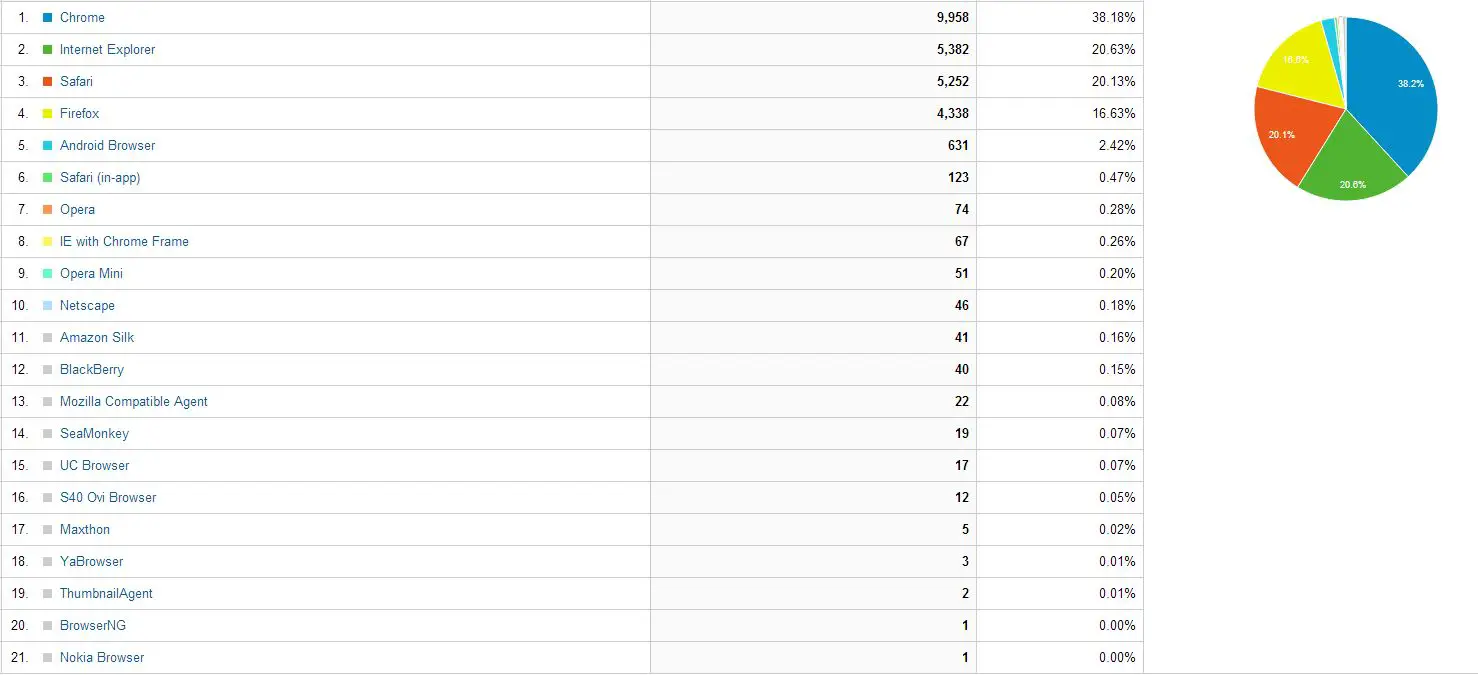
Browser based solutions theoretically remove the need for a custom client, being based on internet standards like HTML. However every browser and virtually every version of every browser implements these standards differently. Last month’s visitors to my blog used 21 different browsers to access the site, and on average there were 6 different version of each browser used. The chart below shows my statistics on browsers (click to enlarge).
 |
In addition to the proliferation issue, browsers are not good at adjusting to major differences in the display capabilities of your system—which might range from a small smartphone to a monster multiple monitor setup. The net result is that browsers are not ideal platforms for implementing advance trading platforms—however this is the approach that Fidelity is betting on with their ActiveTraderPro.com offering.
Schwab’s approach uses Citrix’s session virtualization client to completely avoid putting their stock / trader specific software on your machine. Instead you run a general purpose Citrix client that connects you to the Schwab server running StreetSmart Edge.
SSE in the cloud addressed a big performance problem that I’ve been having on my Windows 7 based machine. The downloaded version of SSE runs fine on my Vista based machine (see here for an updated review on the functionality), but was very slow on my reasonably powerful (Dual core 3.2 Ghz, 6 Gb RAM) system running Windows 7. Option chain updates in particular were excruciatingly slow.
With all the heavy computation moved to the Schwab server and no need to download large amounts of data to my machine I experienced a dramatic performance improvement in SSE. I’m still not seeing blazing performance, but it’s comfortably fast—I can stay focused on the task at hand, rather than impatiently waiting for an update. It also added the ability for me to run SSE on my netbook when I’m on the road.
If you’re using SSE and having performance problems with the downloaded version I suggest you give Schwab a call at 800-435-4000 and sign up for the cloud version. So far Schwab has been keeping the features of the download and cloud versions of SSE well synchronized. In the past I had issues with SSE running on Chrome, but now it works well with Internet Explorer and Chrome.
Schwab officially supports Windows and Mac based systems with SSE on the cloud. At least one user has been able to run on an iPad Air tablet (using Safari to launch the Citrix client).
With the current cloud version (1.26.605) there are a few rough spots:
- SSE file operations are different. SSE is running on a remote machine, but typically you want to save/retrieve your files on your local machine. On Windows when you initially try to save/retrieve a file you will initially be pointed to a folder that exists on the Schwab server that you don’t have read access to. Click on the computer symbol on the left of the dialog to connect to your computer. This takes a while and you’ll may get an “An online application is attempting to access files on your computer” message, with a choice of whether to allow or block it. You get this message because the cloud SSE is trying to communicate with your computer’s file system. If you allow it you can save your files locally, but you won’t get any help putting things in a directory. Initially you are put right at the C:\ drive level.
- System alerts beeps might not work correctly

Click here to leave a comment
1 thought on “Schwab Puts StreetSmart Edge® in the Cloud”